Describe the Best Healing Process for a Surgical Wound
When sutures are used to close a wound ensuring the correct tension of the sutures is essential. In adult humans optimal wound healing involves the following the events.
Wound Healing Primary Intention Secondary Intention Teachmesurgery
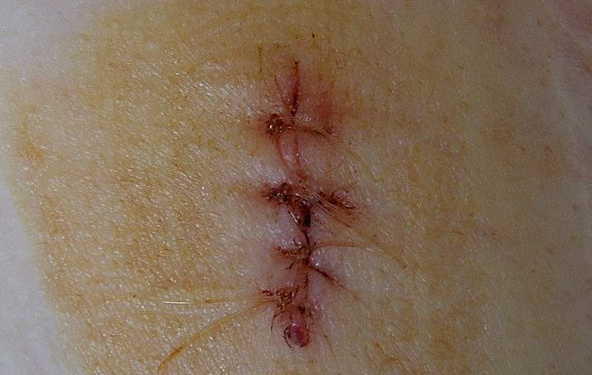
Often referred to as primary closure healing by primary intention involves closure and approximation of an incision with the goal of complete functional healing.

. Phases of the wound healing process. Describe Wound Edges. The edges will pull together and you might see some thickening there.
Most surgically-created wounds are approximated and closed primarily using sutures staples adhesive tapes or skin adhesives. Wound is intentionally left open post-surgery to fill. In the proliferative phase the wound contracts as new tissues are built.
The first phase begins immediately after surgery and lasts around 2 weeks. The wound becomes slightly swollen red or pink and tender. AWound healing is a biological process occurring in the human body.
Because the initial 48 hours are the most critical for successful wound healing postoperative radiation is often administered 3 to 4 weeks after surgery. Oxygen is essential for healing. Inflammation is a natural part of the wound healing process and only problematic if prolonged or excessive.
Wound drainage systems are designed to allow enough moisture to remain in tissues to promote regeneration and lessen inflammation while removing excess exudate or material that may hamper the healing process. Surgical Wound Healing. Since wound healing is basically collagen synthesis steroids have a positive effect on the healing process.
This fluid helps clean the area. Any wound made by a scalpel will heal by primary intention. Firmly Adherent does not pull away from the wound base Tissue Amount Describe in percentages eg 50 of wound bed is covered with loosely adherent yellow.
These categories depend on how contaminated or clean the wound is the risk of infection and where the wound is located on the body. It heals at a predictable and expected rate according to the normal wound healing process. Wounds can be cleaned with either irrigation or scrubbed and irrigated with a 09 saline solution.
Blood vessels open in the area so blood can bring oxygen and nutrients to the wound. The proliferative phase of wound healing is when the wound is rebuilt with new tissue made up of collagen and extracellular matrix. And 6 proper synthesis cross-linking and alignment of.
The scar healing process for a surgical wound goes through 3 main phases. Loosely Adherent pulls away from the wound but is attached to wound base. It includes clotting of platelets and constriction of blood vessels to stop blood loss in addition to the arrival of white blood cells to kill bacteria and naturally clean the wound site.
A scar starts to form on the cut. Wound edges are approximated with sutures staples or glue at the time of surgery and completely seal within 24-48 hours healing in 8-10 days o Secondary intention. Understanding how wounds heal enables nurses to apply the appropriate treatment and management techniques at each phase to support the healing process.
5 prompt re-epithelialization re-growth of epithelial tissue over the wound surface. False Radiation in large doses preoperatively speeds tissue healing. New tissue fills the sides and base of the wound.
There are three stages in the wound healing process. White blood cells help fight infection from germs and begin to repair the wound. Wounds Background Surgical wounds heal by one of three methods1.
The edges of the wound are approximated. Inflammation which initiates short. In this lecture we had discussed about both acute and chronic wounds.
Though the process is continuous it is commonly referred to as occurring in phases The main phases of wound healing include coagulation which begins immediately after injury. Describe Surrounding Tissue Periwound Non-Adherent easily separated from the wound base. Inflammatory phase This phase begins at the time of injury and lasts up to four days.
3 mesenchymal cell differentiation proliferation and migration to the wound site. This is the building up of. The skin cells multiply and synthesize the main components of the dermis collagen and elastin fibers in particular.
Which statement best describes the healing process for a surgical wound that has been closed with the use of sutures. This is the creation of new blood vessels in the area of the wound healing. This is the first in a six-part series on wound management.
Wound healing is a complicated process that recruits at least 4 distinct cell types. It describes the stages of the wound healing. Alternately wounds can be scrubbed with pluronic polyols and irrigated with normal saline.
Surgeons can aid healing by ensuring adequate opposition of the wound edges through use of surgical glue sutures or staples. This part of your healing lasts from about 4 days to a month after your surgery. You also may see some clear fluid oozing from the wound.
This occurs over the course of four different processes. This is the process of creating new skin tissue in the various layers of damaged skin. Debridement aids in the surgical healing process.
Surgical wounds can be classified into one of four categories. To provide radiation therapy intraoperatively or immediately postoperatively brachytherapy is often used in head and neck oncologic surgery. An acute wound is an injury to the skin that occurs suddenly rather than over time.
The scar is generally neat and slightly visible. Surgical wound drainage is recognized as a key element in facilitating the healing process. Wound management 1.
The proliferate phase is longer with surgical wounds. Tap water is frequently used by patients to irrigate wounds before seeking out medical attention.
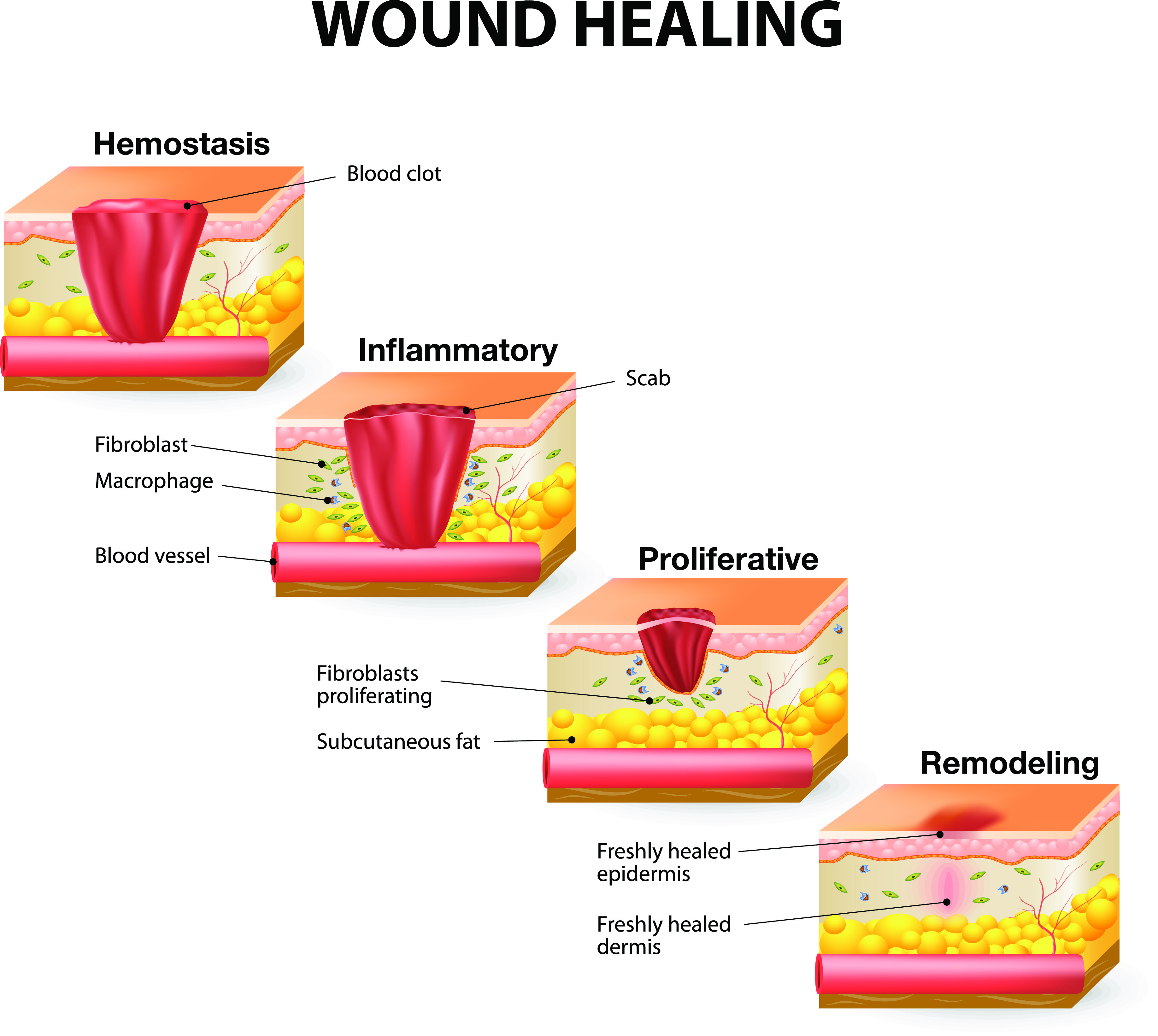
How Wounds Heal The 4 Main Phases Of Wound Healing Shield Healthcare

Wound Healing Stages Google Search Wound Care Nursing Wound Care Systemic Inflammation
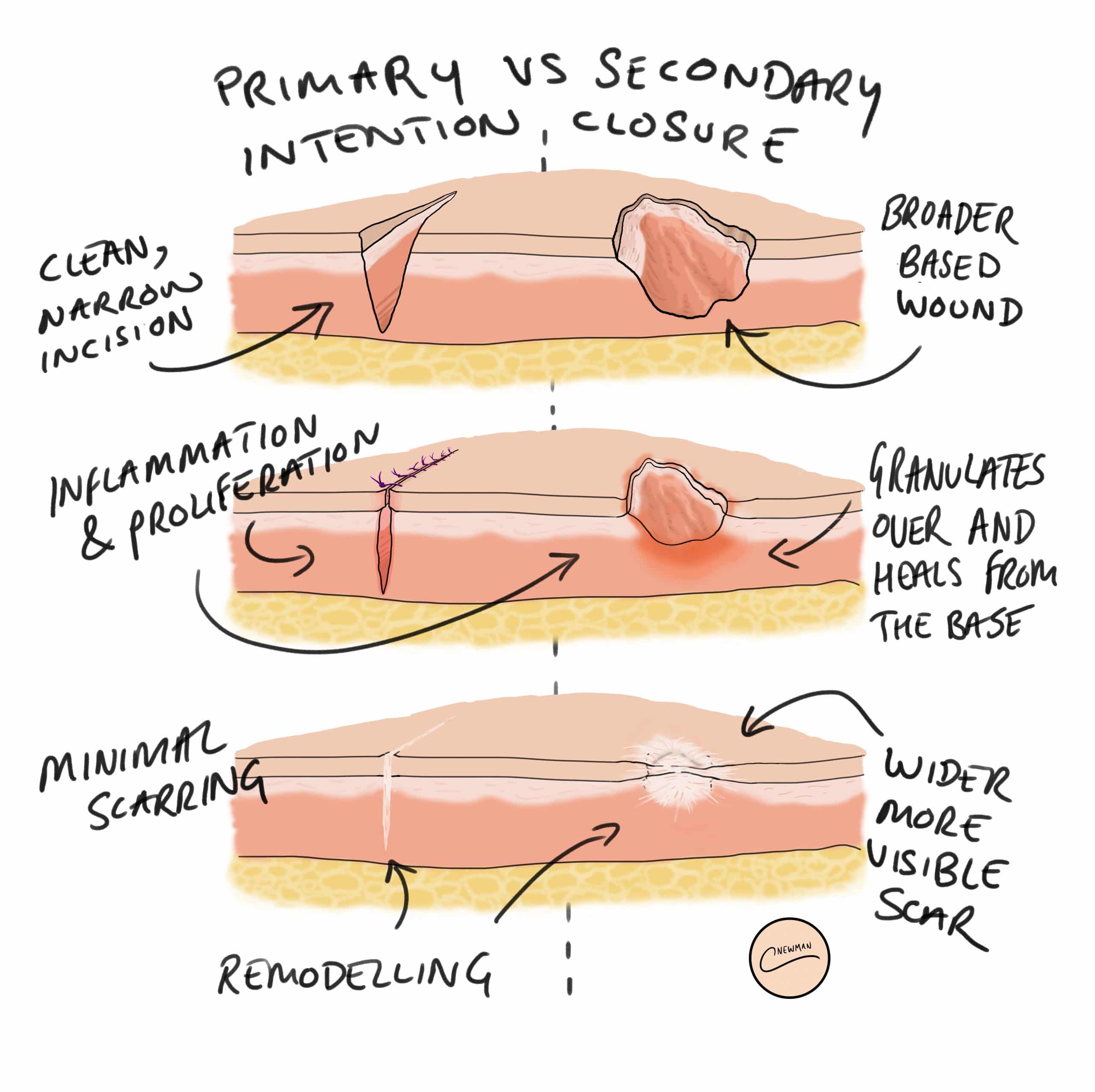
Wound Healing Primary Intention Secondary Intention Teachmesurgery

Comments
Post a Comment